
.webp)
Luxury Vinyl vs. Hardwood Flooring
We install both, which means we have no reason to sell you one over the other. That turns out to be unusual in this business, because most contractors specialize in one material and their recommendation follows their specialty rather than your room.
Here is the honest version. Neither material wins across the board. Luxury vinyl beats hardwood decisively in some rooms and loses badly in others, and the deciding factor is usually where the floor is going rather than what it costs.
The short answer: hardwood wins on lifespan, repairability, and resale value. Luxury vinyl wins on moisture, upfront cost, and speed of installation.
Below grade or over a slab, choose LVP. On main and upper floors where the subfloor is sound, hardwood is almost always the better long-term investment.
The Core Difference: One Is Wood, One Is Not
This sounds obvious and it is the source of most of the confusion. Luxury vinyl plank is a manufactured product built from PVC layers with a printed photographic image of wood under a clear wear layer. It can be convincing, especially at a distance, but there is no wood in it.
The National Wood Flooring Association defines a wood floor as any product containing real wood as the top-most wearable surface, which covers solid, engineered, and composite engineered flooring. Luxury vinyl, laminate, and wood-look tile fall outside that definition entirely. They are wood-look products rather than wood.
That distinction drives every practical difference below. Real wood can be sanded, restained, and restored decades later. A printed image cannot be repaired once its wear layer is compromised, because there is nothing underneath but more plastic.
Side by Side: How They Actually Compare
| Factor | Hardwood | Luxury vinyl plank |
|---|---|---|
| Installed cost in KC | $10 to $20 per sq ft | $5 to $15 per sq ft |
| Lifespan | Decades, often generations | Roughly 15 to 25 years |
| Refinishable | Yes, four to six times for solid | No |
| Water resistance | Poor, damaged by standing water | Excellent, fully waterproof |
| Below grade or over slab | Risky to unsuitable | Ideal |
| Scratch behavior | Scratches, but repairable | Resists scratching, not repairable |
| Resale impact | Adds measurable value | Neutral at best |
| Underfoot feel and sound | Solid, warm, substantial | Softer, can sound hollow |
| Installation timeline | One to two weeks with finishing | Days |
Read that table by room rather than by column. A basement family room and a second floor bedroom should not get the same answer, and a contractor who gives you one recommendation for the whole house probably has not thought about it.
Where Luxury Vinyl Is the Better Choice
Basements and anything below grade
This is the clearest case. Concrete releases moisture for years after it cures, and below grade adds constant humidity pressure from the surrounding soil. Solid hardwood in that environment will cup, gap, or buckle no matter how well it is installed. LVP is unaffected. Our luxury vinyl plank installation service covers the moisture testing, slab prep, and underlayment that make these rooms work.
Slab foundations
Same problem without the basement. Homes built on slab need either engineered wood with a proper vapor barrier or a material that does not care about moisture at all.
Bathrooms, laundry rooms, and mudrooms
Rooms where standing water is a matter of when rather than if. A hardwood floor in a laundry room is a leak away from a repair bill.
Rentals and investment properties
When you will not be present to catch a problem early and tenants change every year or two, waterproof and low maintenance beats refinishable.
Tight budgets on large square footage
At $5 to $15 per square foot installed versus $10 to $20 for hardwood, the gap compounds fast across a whole house. If the choice is LVP now or nothing for three years, LVP now is a reasonable answer.
Where Hardwood Wins Clearly
It can be restored, repeatedly
This is the whole argument in one line. A scratched hardwood floor gets sanded and refinished. A scratched LVP plank gets replaced, and matching a discontinued product five years later is often impossible. Solid hardwood supports four to six full refinishes across its life, which is why century old oak in Brookside and Waldo is still in service. Our hardwood floor refinishing service exists precisely because that restoration is possible.
Lifespan is not close
LVP is generally expected to last fifteen to twenty five years before replacement. Properly maintained hardwood lasts decades and frequently generations. Over a forty year horizon you buy LVP twice and hardwood once.
Resale value
The NWFA cites a survey of real estate agents concluding that homes with wood floors sell faster and for as much as 10 percent more than comparable homes without them. Vinyl does not carry that effect. Forbes Home puts it plainly, noting that vinyl plank will not necessarily lower a home's value but likely will not raise it, because synthetic floors lack the appeal of authentic hardwood to buyers.
Both figures come from surveys and estimates rather than paired sales data, so treat them as directional. The direction is consistent across sources, though, and it matches what we hear from Kansas City agents.
Feel, sound, and authenticity
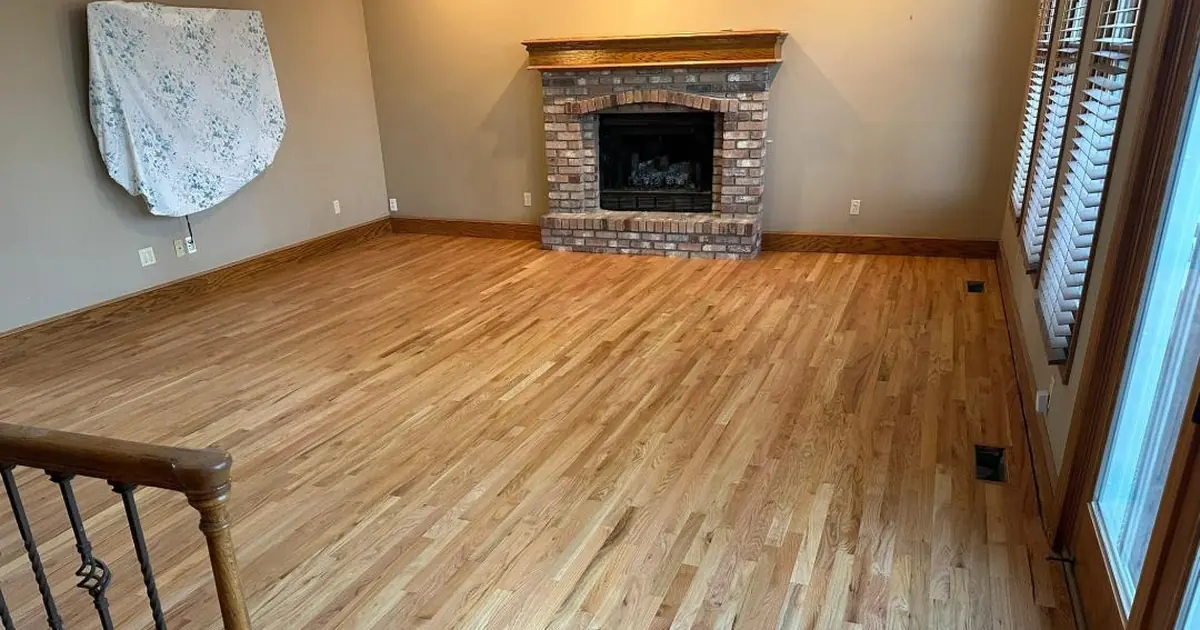
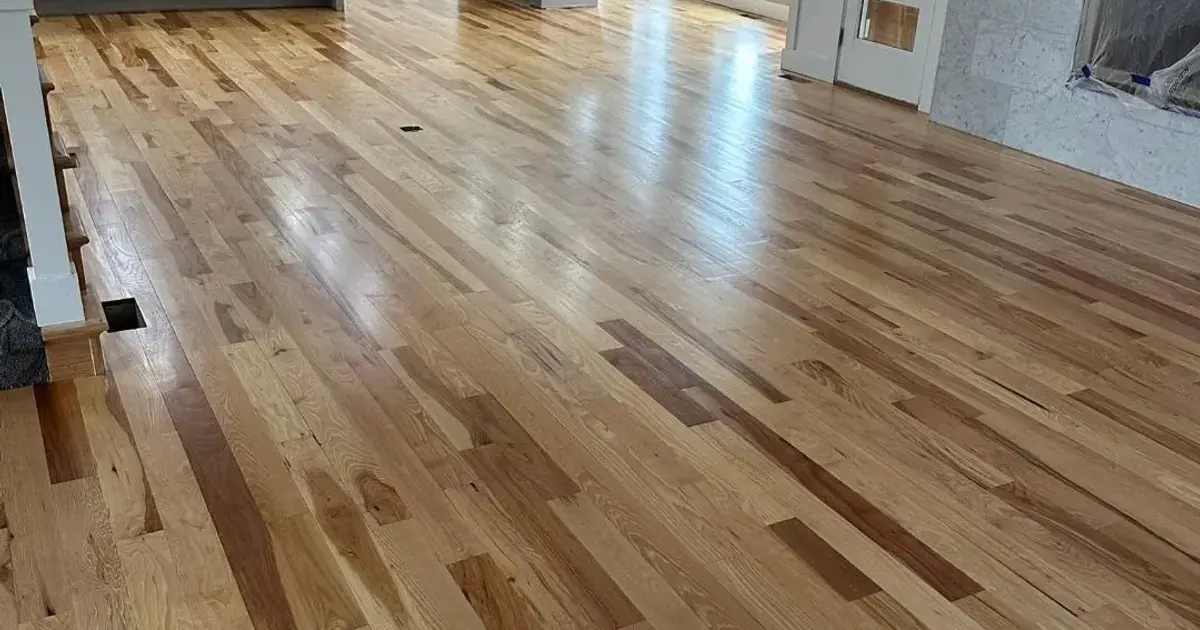
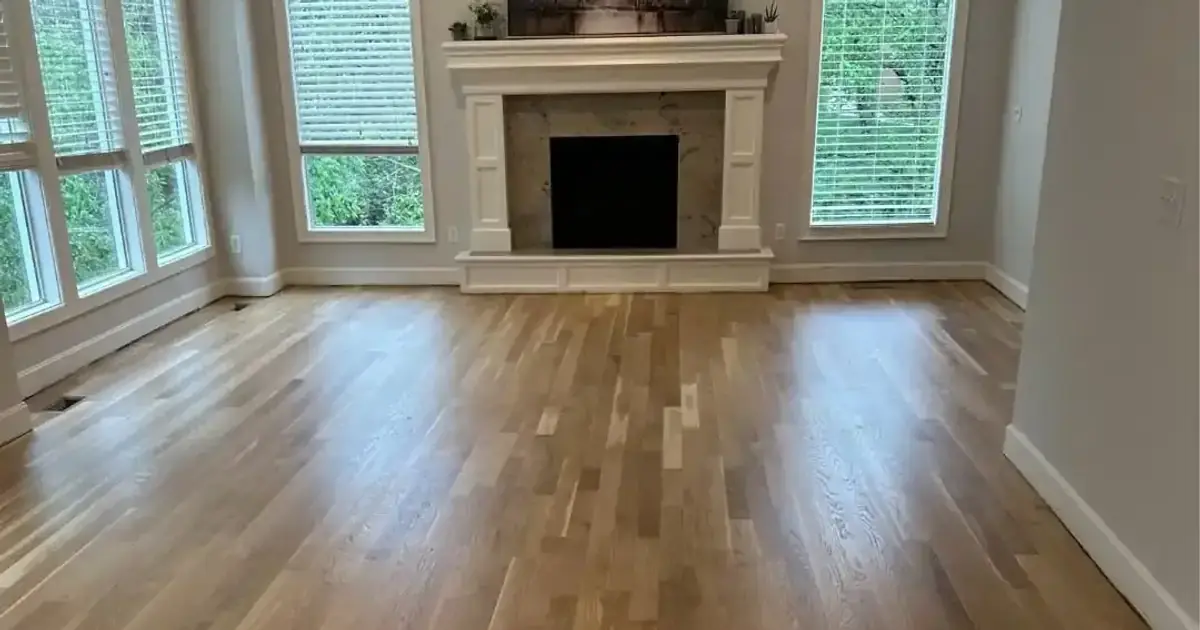
Wood is solid underfoot and warm to the touch. LVP over a subfloor can sound hollow and feel slightly soft, particularly in larger open rooms. Good underlayment narrows the gap but does not close it. You can see how real wood reads in finished rooms in our project gallery.
How Laminate Fits Into the Comparison
Laminate gets confused with luxury vinyl constantly, and the difference matters when water is involved.
Laminate uses a printed image over a high density fiberboard core. That core is wood based, which means it absorbs water and swells permanently when it does. LVP has a plastic core, so it does not. Laminate is generally the cheapest of the three, it often has good scratch resistance, and it can look convincing, but it is the worst performer in moisture and it cannot be refinished any more than vinyl can.
The reasoning tracks the LVP comparison with one change: laminate does not have the moisture advantage. That removes the main reason to choose a wood-look product over wood in the first place, which is why we rarely recommend laminate over either alternative.
Hardwood Compared to Carpet and Tile
Hardwood versus carpet
Carpet costs less upfront and needs complete replacement roughly every eight to twelve years, since worn carpet cannot be restored. Hardwood costs more initially and can be refinished repeatedly. Carpet also traps dust, dander, and allergens in a way hard surfaces do not, which matters in households with allergy concerns. The scenario worth checking first: in older Kansas City homes, there is frequently original oak already under the carpet, and a floor inspection will tell you whether it can be brought back rather than replaced.
Hardwood versus tile
Tile beats hardwood on water and heat resistance, which is why it holds its place in bathrooms and some kitchens. It is harder underfoot, colder in a Kansas City January, and grout lines need periodic maintenance and resealing. Tile is also unforgiving on dropped dishes. For open-concept main floors, hardwood usually reads better because it runs continuously without transitions, but tile remains the right answer in genuinely wet rooms.
How Kansas City Conditions Affect the Decision
Our climate pushes this decision harder than a milder one would. Humid summers and cold, dry winters make wood expand and contract noticeably across the year, which is why acclimation before installation and humidity control afterward matter so much here. Keeping indoor humidity between roughly 35 and 55 percent year round protects hardwood substantially.
LVP is dimensionally stable through those swings, which is a genuine advantage in spaces that are not climate controlled year round: an unfinished basement, a sunroom, a garage conversion, a barndominium.
The other local factor is housing stock. Much of the older KC metro sits on original hardwood that has been covered at some point. Before choosing any new material, it is worth confirming what is already down there. If there is sound oak under the carpet, refinishing it will cost less than installing LVP over it, and it will be worth more at resale. If the boards are too far gone, hardwood floor replacement or a switch to LVP both become reasonable options.
A Practical Way to Decide
Go room by room rather than choosing one material for the house.
- Below grade, over slab, or in a genuinely wet room, choose LVP
- Main and upper floors with a sound wood subfloor, choose hardwood
- Planning to stay ten or more years, hardwood pays back through refinishing rather than replacement
- Selling within a couple of years, hardwood carries the resale advantage
- Rental or investment property, LVP usually makes more sense
- Existing hardwood already in place, check whether refinishing beats replacing anything
Mixing materials across a house is normal and sensible. Hardwood on the main floor with LVP in the basement is a common and entirely defensible combination, and our hardwood floor installation service and vinyl work frequently happen on the same project for exactly that reason.
Get Honest Guidance on Which Floor Fits Your Home
We install both hardwood and luxury vinyl, so our recommendation follows your rooms rather than our inventory. We will look at your subfloor, test moisture where it matters, check whether existing hardwood is worth restoring, and tell you which material belongs in each space.
If LVP is the right call for your basement and hardwood for your main floor, that is what we will quote. Owner Justin inspects every project personally, and all work carries a one year workmanship warranty. Serving Kansas City, Overland Park, Olathe, Lenexa, Leawood, Prairie Village, and Lee's Summit.
Weighing LVP against hardwood? We install both. Call (816) 237-9327 or get honest guidance and a free estimate.
Frequently Asked Questions
Is luxury vinyl cheaper than hardwood?
Yes, upfront. In the Kansas City area luxury vinyl plank runs roughly $5 to $15 per square foot installed, while hardwood runs about $10 to $20 per square foot installed. On a large project that gap adds up quickly. The picture changes over a longer horizon. LVP typically lasts fifteen to twenty five years and then has to be replaced entirely, because it cannot be refinished. Solid hardwood can be sanded and refinished four to six times, so the same floor keeps going for decades. Across a thirty or forty year period you generally buy vinyl twice and hardwood once, which narrows or reverses the cost advantage depending on how long you stay.
Which lasts longer, LVP or hardwood?
Hardwood, and not by a small margin. Luxury vinyl plank is generally expected to last fifteen to twenty five years before it needs replacing. Properly maintained hardwood lasts decades and often generations, which is why plenty of century old oak floors in older Kansas City neighborhoods are still in daily use. The reason is repairability rather than toughness. LVP actually resists scratching better than wood does day to day, but once its wear layer is worn or a plank is gouged, the only fix is replacement, and matching a discontinued product years later is frequently impossible. A scratched hardwood floor gets sanded and refinished back to new.
Which adds more resale value?
Hardwood, clearly. The National Wood Flooring Association cites a survey of real estate agents concluding that homes with wood floors sell faster and for up to 10 percent more than comparable homes without them. Forbes Home notes that vinyl plank will not necessarily lower a home's value but likely will not raise it either, since synthetic floors do not carry the same appeal to buyers as authentic wood. Worth noting that both figures come from surveys and professional estimates rather than paired sales data, so treat them as directional rather than as a guarantee for your specific house. If resale within a few years is a priority, hardwood is the stronger play, and refinishing existing hardwood is stronger still because the cost is so much lower.
-833afcb2.webp)
-32318281.webp)
-6bc19e79.webp)
-ca641e82.webp)
.webp)
.webp)