

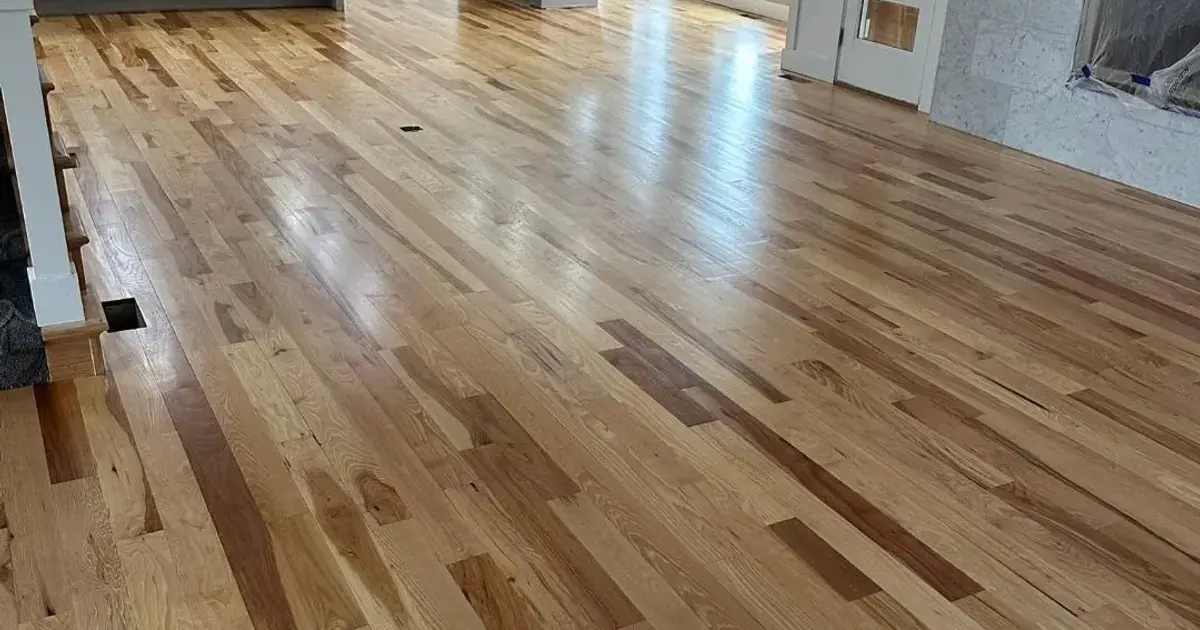
Engineered vs. Solid Hardwood: Which Should You Install in Kansas City?
Both are real wood. That is the first thing to clear up, because the most common assumption we hear in Kansas City homes is that engineered flooring is some kind of imitation. It is not. The difference is how the board is built, and that construction difference decides where each one belongs.
In a climate like ours, with humid summers and cold dry winters, this choice matters more than it would in a milder place. Here is how to make it room by room.
The short answer: solid hardwood on main and upper floors over wood subfloors, where its ability to be refinished four to six times pays off over decades.
Engineered below grade, over concrete slabs, and anywhere moisture or wide planks are in play, because its layered construction moves far less with seasonal humidity.
What Each One Actually Is
The National Wood Flooring Association defines solid wood flooring as one piece of wood from top to bottom, suitable for any room on or above ground, and notes it can be sanded and refinished many times. Engineered wood flooring is also made of real wood but built in multiple layers with a high quality wood top layer, and because it expands and contracts less than solid wood, the NWFA describes it as ideal for basement installations. It can still be sanded and refinished, just not as many times.
Solid hardwood construction
A single piece of hardwood, typically three quarters of an inch thick, milled from one board. Roughly a quarter inch of that sits above the tongue and groove, and that quarter inch is the sandable material that gives solid flooring its long life.
Engineered hardwood construction
A real hardwood wear layer bonded over a core of plywood or wood plies running at opposing directions. That cross grain structure is the whole point: by orienting each layer against the one above it, the board resists the expansion and contraction that makes solid wood move with humidity.
One category worth knowing about
The NWFA also identifies composite engineered flooring, which has real wood only on the wearable surface while the backing and core may be any composite material. It is worth asking which you are being quoted, because core construction affects both stability and how the floor can be installed.
Side by Side: The Practical Differences
| Factor | Solid hardwood | Engineered hardwood |
|---|---|---|
| Construction | One piece of wood throughout | Real wood wear layer over a plywood core |
| Typical thickness | Three quarters of an inch | Varies, wear layer commonly 1mm to 6mm |
| Refinishing | Four to six times | Once or twice at 3mm or thicker, none below 2mm |
| Below grade | Not recommended | Suitable |
| Over concrete slab | Risky, needs careful moisture control | Works well with proper vapor barrier |
| Seasonal movement | Expands and contracts noticeably | Significantly more stable |
| Wide planks | More prone to cupping and gapping | Handles width more reliably |
| Installation methods | Usually nail down over wood subfloor | Nail down, glue down, or floating |
| Expected lifespan | Decades, often generations | Depends heavily on wear layer thickness |
Read that by room rather than by column. The right answer for a second floor bedroom and a walkout basement are not the same, and any contractor recommending one material for an entire house has probably not thought it through.
The Wear Layer Decides Almost Everything
If you take one thing from this comparison, make it this. On engineered flooring, the wear layer is the real wood veneer above the core, and it determines whether the floor can ever be refinished.
| Wear layer | What it means |
|---|---|
| 6mm or thicker | Comparable to solid hardwood for sandability, several refinishes possible |
| 3mm to 4mm | The common mid range, generally two to three sandings over its life |
| 2mm | Marginal, one light sanding at most in skilled hands |
| 1mm or less | Cannot be sanded at all, recoating only |
Plenty of budget engineered flooring ships with roughly a 1mm veneer. That product looks identical to a 6mm engineered floor on day one and behaves completely differently in year fifteen, when one can be brought back to new and the other has to be replaced. The brand name will not tell you which you have, and neither will the showroom sample unless you ask specifically.
If you already have engineered flooring and want to know what it can take, our floor inspection service measures the wear layer directly rather than estimating from the product name.
Why This Decision Is Harder in Kansas City
Our climate swings hard in both directions. Summers here are genuinely humid and winters are cold and dry, which means indoor relative humidity can move a long way across the year unless you actively manage it. Wood responds to that by taking on and giving up moisture, expanding in summer and shrinking in winter.
Solid hardwood feels that cycle most. It is why KC homeowners notice thin gaps between boards each January that close again by July, and why proper acclimation before installation matters so much here. The NWFA guidance is to hold indoor relative humidity in roughly the 30 to 50 percent range year round, and manufacturer specifications sometimes call for 35 to 55 percent. Where they differ, the manufacturer's numbers govern, because your warranty depends on them.
Engineered flooring moves less through that same cycle, which is its main practical advantage here. That does not make it immune. Held below the recommended humidity range for long enough, engineered boards can still split, face check along the veneer, or dry cup. Stability is a matter of degree rather than a guarantee.
Choosing by Room
Main and upper floors over wood subfloor
Solid hardwood, in most cases. Above grade over a sound wood subfloor is exactly the condition solid flooring was designed for, and the ability to refinish four to six times is what makes century old oak in Brookside and Waldo still serviceable today.
Basements and anything below grade
Engineered, without much debate. Solid hardwood below grade is fighting constant moisture pressure from the slab and surrounding soil. Where moisture is severe enough that even engineered is a gamble, luxury vinyl plank is the honest answer, and we will tell you when that is the case.
Over a concrete slab
Engineered, with moisture testing done first and a proper vapor barrier. Concrete releases moisture for years after it cures, and installing any wood over an untested slab is how floors end up cupping within a season.
Kitchens and half baths
Either can work above grade, with engineered slightly more forgiving of spills and humidity swings. Full baths and laundry rooms are a different conversation, since standing water is a matter of when rather than if.
Wide plank installations
Engineered has the real advantage. Wider boards magnify seasonal movement, so a seven inch solid plank will show far more gapping in a Kansas City winter than the same width in engineered construction. You can see how different plank widths read once installed in our project gallery.
Radiant heated floors
Engineered, essentially always. Heat cycling under a solid board is exactly the condition its construction handles worst.
Cost, Installation, and Finish
Hardwood floor installation in the Kansas City area runs $10 to $20 per square foot installed, covering materials, labor, and finishing. Both types fall within that band, and the spread inside it has more to do with species, plank width, wear layer thickness, and layout complexity than with solid versus engineered as a category. A premium engineered floor with a 6mm veneer can easily cost more than a standard solid oak.
Installation method differs in ways that affect the quote. Solid hardwood is typically nailed down over a wood subfloor. Engineered can be nailed, glued, or floated, which is what makes it workable over concrete where nailing is not an option. Our hardwood floor installation service covers subfloor preparation, moisture testing, acclimation, and layout for both.
Finish works the same way on both, which surprises people. Site finishing an engineered floor with a decent wear layer produces the same result as site finishing solid, because you are coating real wood either way. We use Bona waterborne finish systems, which are formulated not to fade or amber over time, on both types. Prefinished engineered arrives with a factory finish already cured, which trades the flexibility of custom color for a faster installation.
What Happens in Twenty Years
This is the part worth thinking through before you choose, because it is where the two paths genuinely diverge.
A solid hardwood floor installed today and maintained properly can be sanded back to bare wood several times across your ownership and beyond it. Scratches, worn traffic lanes, a dated stain color: all of it is reversible. That is why replacing solid hardwood is comparatively rare and hardwood floor replacement usually comes down to moisture or structural failure rather than wear.
An engineered floor with a 4mm to 6mm wear layer follows a similar path, just with fewer passes available. An engineered floor with a 1mm veneer does not. When its surface wears, the options are recoating while the finish holds or replacement once it does not. Neither outcome is wrong, but they should be priced into the decision rather than discovered later.
Get a Recommendation Built Around Your Rooms
The right answer depends on your subfloor, your grade level, your moisture conditions, and how long you plan to stay. We will check all of it, test moisture where it matters, and tell you which construction belongs in each space rather than selling you one material for the whole house.
If that means solid upstairs and engineered in the basement, that is what we will quote. Owner Justin inspects every project personally, and all work carries a one year workmanship warranty. Serving Kansas City, Overland Park, Olathe, Lenexa, Leawood, Prairie Village, and Lee's Summit.
Deciding between engineered and solid? Call (816) 237-9327 or get a tailored recommendation and free estimate.
Frequently Asked Questions
Is engineered hardwood real wood?
Yes. The National Wood Flooring Association describes engineered wood flooring as made of real wood, built in multiple layers with the top layer made of high quality wood. The surface you walk on and see is genuine hardwood, the same species you would get in a solid board. The difference is what sits underneath: instead of one continuous piece of wood, engineered flooring bonds that real wood wear layer to a core of plywood or wood plies running in opposing directions. That cross grain construction is what gives engineered flooring its stability. It is worth distinguishing this from composite engineered flooring, which the NWFA defines as having real wood only on the wearable surface with a core that may be any composite material, and from laminate or luxury vinyl, which contain no wood on the surface at all and are printed images rather than wood.
Which is better for basements?
Engineered hardwood, clearly. The NWFA notes that because engineered wood floors expand and contract less than solid wood flooring, they are ideal for basement installations. Solid hardwood below grade is fighting constant moisture pressure from the slab and the surrounding soil, and it will eventually cup, gap, or buckle regardless of how carefully it is installed. Engineered handles those conditions far better thanks to its cross grain core. Two caveats matter in Kansas City. First, moisture testing of the slab should happen before anything is installed, since concrete releases moisture for years after it cures. Second, where basement moisture is severe, even engineered wood may not be the right call, and luxury vinyl plank becomes the more sensible choice.
Can engineered hardwood be refinished?
Sometimes, and it depends entirely on wear layer thickness rather than on brand or appearance. The NWFA confirms engineered flooring can be sanded and refinished, but not as many times as solid wood. In practice, a wear layer of 6mm or thicker performs close to solid hardwood and supports several refinishes. Between 3mm and 4mm, the common mid range, expect roughly two to three sandings across the floor's life. At 2mm you are looking at one light sanding at most, and at 1mm or less sanding will cut straight through the veneer into the core and ruin the boards permanently. Plenty of budget engineered flooring ships with about 1mm. Those floors can usually still be screened and recoated to refresh the finish, which improves appearance without removing wood. Measuring the wear layer before anyone sands is essential.
.webp)
-833afcb2.webp)
-32318281.webp)
-6bc19e79.webp)
-ca641e82.webp)
.webp)
.webp)